Solo travel trends 2026: what our customers told us about going it alone
Why pick a trip for one, how far would you go and what goes in the bag? We asked our customers across Europe to find out.
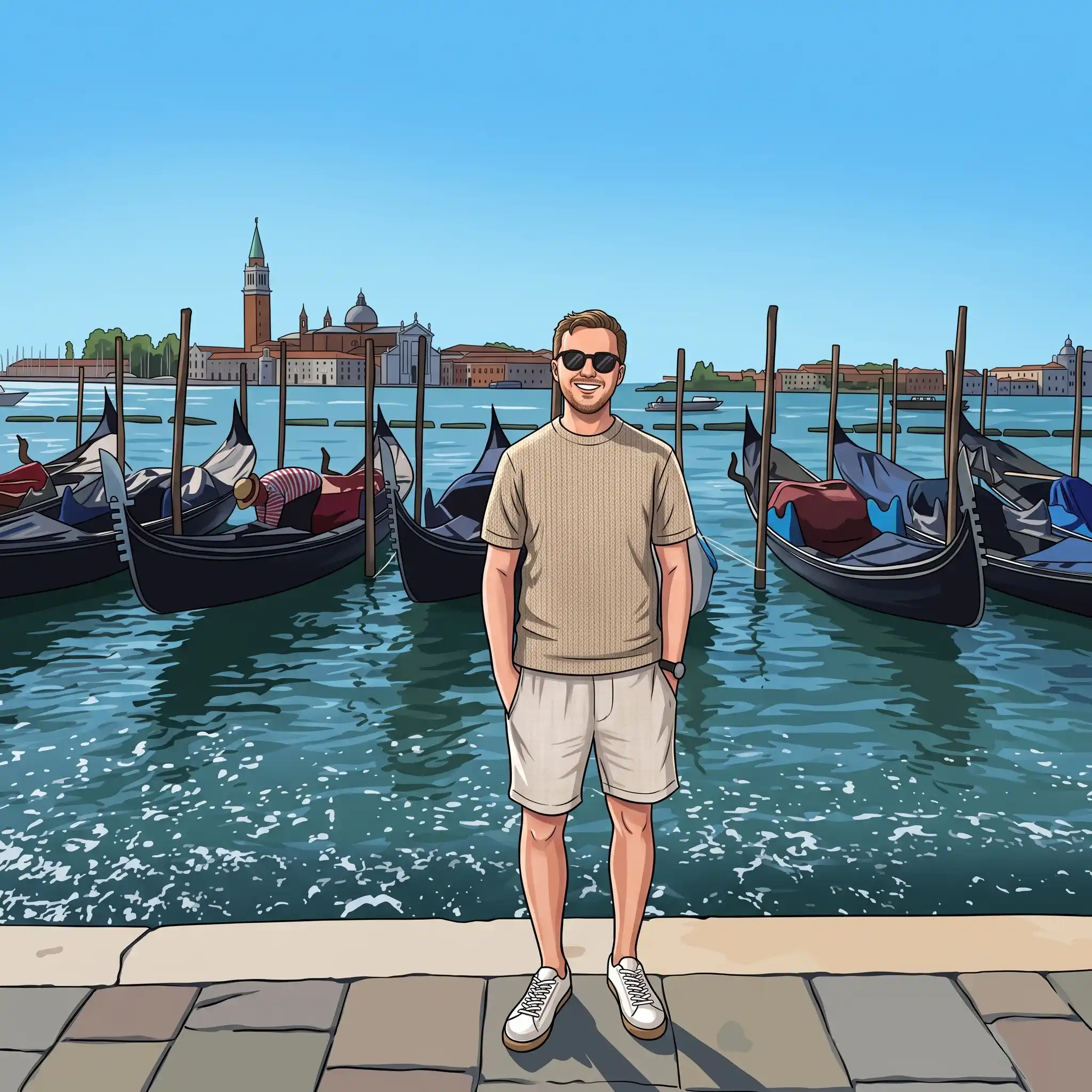
Solo travel has stopped being the backup plan
Group trips can stall in the group chat. One person has a wedding that weekend, another is waiting for leave to be approved, and three weeks later nothing is booked. Going alone skips all of that. You choose the dates and the destination, and you can book tonight.
More people now treat a solo trip as a first choice rather than a fallback, and they plan it with care. They want room to change their mind about a museum or a train, and a safety net for when something goes wrong.
This page covers customers surveyed in France, Germany, Italy, Portugal, Spain and the UK between 9 and 17 June 2026. Every figure is an average of country results, and the text names the markets behind each one.
6
European markets covered by our customer survey
38%
average share giving freedom of movement as a reason for going solo
42%
average share picking four to seven days as the ideal length for a solo trip
33%
average share putting safety items first when packing for a solo trip
Freedom comes first
Ask people why they travel alone and the most common answer is freedom of movement. It tops the list in all six markets, from 32% in the UK to 42% in Italy, and averages 38%.
Every other reason trails it by a distance, and meeting new people comes last of the five in the table below.
Five reasons people give for going alone
Freedom leads at 38%, the average of all six markets. The other four are averages of the markets that reported them, listed in the Basis column.
| Reason | Share of respondents | Basis | What it suggests |
|---|---|---|---|
| Freedom to go where and when they like | 38% | Average of the six markets | Travellers set the route and the pace without checking with anyone. |
| Wanting to try travelling alone | 28% | Average of the UK, Germany and Portugal | Some people go to see how a trip feels when nobody else is part of the plan. |
| Friends or family not available | 27% | Average of the UK, France, Germany, Italy and Portugal | The trip goes ahead even when other people's diaries do not match. |
| Getting to know themselves better | 26% | Average of the UK, Germany, Italy and Portugal | Time away from the usual routine gives people space to reflect. |
| Meeting new people | 21% | Average of the UK, Germany and Portugal | Some people see a solo trip as an easy way to start conversations. |
Fewer people go solo because they have to
In France, the share who go solo because friends or family cannot come fell from 27% in 2023 to 22% in 2026. Over the same period the share citing freedom rose from 36% to 41%.
Women put safety first more often than men
In the UK, 44% of women list safety items as their packing priority against 34% of men. In Italy the split is 32% against 23%, and German results point the same way.
Younger travellers link going solo with growth
Among French 18 to 24 year olds, 49% see a solo trip as a way to know themselves better, and 41% of German Gen Z do. In Italy, 59% of Gen Z connect it with self-sufficiency, and in Portugal 53% of post-millennials value that quality.
How many days make a good solo trip
Four to seven days is the most common answer in all six markets. The averages cover the UK, France, Germany, Italy, Portugal and Spain.
| Length of trip | Average of six markets | Lowest to highest market |
|---|---|---|
| 4 to 7 days | 42% | 37% in France to 49% in Spain |
| 1 to 3 days | 20% | 14% in France and Germany to 28% in Portugal |
| 8 to 14 days | 18% | 11% in the UK to 25% in France |
| Over 14 days | 6% | 4% in Portugal to 9% in France (average of Spain, France and Portugal, the only markets that reported this band) |
German respondents put the ideal solo trip at 7.1 days on average, and 24% of them choose eight to 14 days. Gender splits show up too. In the UK, Italy and Portugal, women are about twice as likely as men to want one to three days, while men are about twice as likely to want eight to 14.
How far people would go on their own
On average, 34% of respondents would go anywhere in the world. Portugal (40%) is the most willing and Spain (31%) the least.
Any destination
This is the most common answer in the UK, France, Italy and Portugal. Men choose it more often than women in the UK (40% against 29%), France (39% against 29%) and Germany (40% against 28%).
Staying in Europe
The average is 29%, across the UK (25%), Spain (27%), Italy (30%) and Portugal (34%).
Staying in their own country
The average is 23%, across the UK (17%), Portugal (20%) and Spain (32%). In Spain it is the most common answer.
Plane, train or car for a trip alone
Flying comes first at 58% on average, ahead of the train at 41% and the car at 38%. The order of those last two changes from market to market.
Flying
58% on average would fly. Portugal (71%) is highest and France (50%) is lowest.
Rail
41% on average would take the train. Spain (46%), Portugal (45%) and the UK (44%) lead, while France is at 31%. Women choose it more often than men in Germany and Italy.
Driving
38% on average would drive. Germany is highest at 46% and Italy lowest at 30%. Men choose the car more often than women in the UK, France, Germany and Italy.
The packing list has changed
When we asked what people put first on a solo packing list, safety items came out at 33% on average. These are things like emergency contact details, first aid supplies and somewhere secure for money. The UK is highest at 40%, followed by France (39%) and Germany (38%). Italy (28%), Spain (27%) and Portugal (25%) sit well below.
The figure has risen since 2023. In France it went from 29% to 39%, and in Spain from 19% to 27%.
Maps, GPS and tickets bought ahead of time help as well. They take the guesswork out of the first few hours somewhere new and leave you free to decide the rest as you go.
What people say they get out of it
We asked which positive effects people link with travelling alone.
Feeling capable
On average, 41% of respondents in the UK, France, Italy and Spain connect travelling alone with self-sufficiency.
A clearer head
Mental clarity appears in two markets. 32% of UK respondents link it with solo travel, and 36% of French 25 to 34 year olds think a trip alone could bring them more of it.
A wider view
27% of UK respondents and 31% of French respondents connect travelling alone with openness to other cultures.
More empathy
In the UK, 15% connect solo travel with empathy. It is the smallest of the four outcomes UK respondents were asked about.
A more personal way to travel
The six markets agree on the headline. People travel alone because they want to choose the trip themselves, from the dates to the first coffee of the day. Freedom tops the list from the UK to Italy, and women across the UK, Italy and Germany pack with safety in mind more often than men do.
The reward people describe is practical. Across the UK, France, Italy and Spain, 41% link travelling alone with feeling more capable, and a third of UK and French respondents say it brings mental clarity. These are small things that stay with you after you unpack: knowing you read the timetable right, picked the right neighbourhood, found your way back in the dark.
Our European customers are not waiting for a group to be free. They are packing a safety net and booking the trip themselves. Whenever you are ready to do the same, you can start with the search box at the top of this page.
Frequently asked questions
Freedom is the most common reason for going solo in the UK, France, Germany, Italy, Portugal and Spain. Safety is the top packing priority in the UK, France and Germany, and younger travellers often link a solo trip with self-development.
Freedom of movement is the leading reason, at 38% on average across the six markets. Trying a new way to travel, friends or family being unavailable, getting to know yourself better and meeting new people follow behind.
On average, 42% pick four to seven days, the most common answer in all six markets. One to three days averages 20% and eight to 14 days averages 18%. German respondents put the ideal trip at 7.1 days on average.
Planes. On average, 58% would fly, 41% would take the train and 38% would drive. Flying is highest in Portugal (71%) and Italy (62%), and rail is highest in Spain (46%), Portugal (45%) and the UK (44%).
On average, 33% put safety items first: emergency contact details, basic first aid supplies and a secure way to carry money. Maps, GPS access and pre-booked tickets also come up.
On average, 41% of respondents in the UK, France, Italy and Spain connect it with self-sufficiency. Mental clarity, openness to other cultures and empathy also appear in the data.
Younger travellers in the survey often connect a solo trip with self-development, from getting to know themselves better to building self-sufficiency. The figures reach 49% among French 18 to 24 year olds and 59% among Italian Gen Z.
This page covers customers surveyed in France, Germany, Italy, Portugal, Spain and the UK between 9 and 17 June 2026. Every figure is a simple average of country results for the markets that reported it, not weighted by sample size.
Time to book a trip for one?
Search flights, choose your dates and go when it suits you.
Search flights